Warm it
Cold film tears and leaves adhesive.
Peel low and slow
Don’t fold it over and yank.
Repainted panels
No maker promises anything there.
In this guide 4 sections
Swipe to see the whole table
| Maker | Heat | Peel | Other |
|---|---|---|---|
| XPEL | Steamer to keep the film pliable | Under 45 degrees | Adhesive remover for residue; professional removal recommended |
| 3M | Heat gun or steamer | 30 to 60 degrees from the paint | Film is for factory paint only |
| SunTek | Steamer in cold weather | About 45 degrees, toward you; don’t fold and rip | SunTek wants a dealer to remove it, especially from original paint |
| LLumar | Not in extreme cold | Professional removal | Indoors, 55°F or warmer; repaired paint not covered |
How the makers say to do it
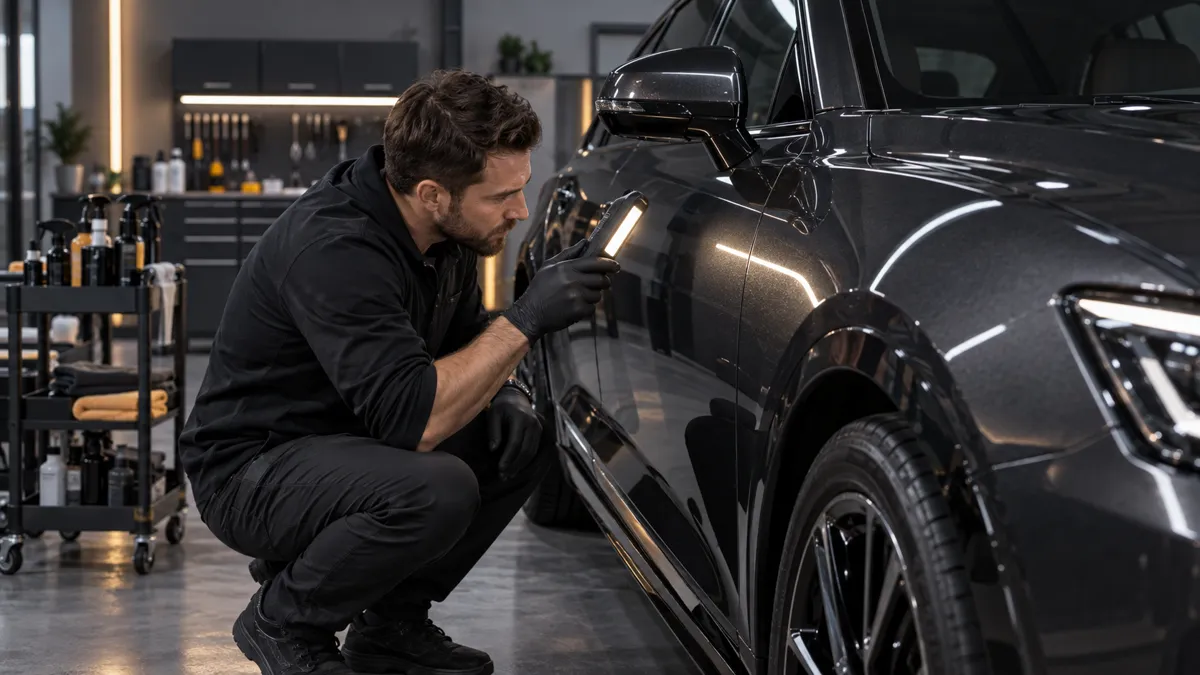
Warm the film first. Cold film tears and leaves adhesive behind. Lift a corner and pull the film back over itself at a low angle, slowly, keeping it warm as you go. Clean leftover adhesive with a remover made for automotive paint, then wash the panel.
XPEL and SunTek both say the film shouldn’t be folded over and yanked, because that leaves the adhesive on the paint.
Will it pull paint off?
XPEL says removal won’t harm paint when done correctly. That’s about factory paint. 3M and LLumar limit their films to original paint, and none of the makers say what happens on a panel that was repainted, where the paint may be less well bonded.
If a panel has been resprayed, tell the shop before the film goes on and again before it comes off.
When film should come off
When it’s yellowed, cracked, lifting or damaged, or before a panel is repaired. If the film is still under warranty, the installer who put it on handles the claim, so call them before removing it yourself.
Paying for removal
Shops price removal separately from installation, and the price depends on how old the film is and how much adhesive stays behind. Ask for the removal and any new film as separate lines on the quote.
Professional installation
Ask shops what’s in the price
Find installers near you, then ask about the exact product, the prep and which surfaces get coated.
Sources
Product claims come from the manufacturers’ own instructions, linked below. Prices come from shops’ published price lists.
- XPEL: product careWashing, self-healing and removal.
- XPEL: frequently asked questionsCoating over film, removal and color film.
- 3M: Scotchgard PPF Pro Series 200 Gloss data sheetConstruction, warranty, coatings over film and removal.
- SunTek: PPF questionsWho should remove film and how.
- LLumar: PPF questionsRemoval, repainted panels and what the warranty excludes.